SPINAL NERVE ROOT CANCER & DISABILITY BENEFITS
WHAT IS SPINAL NERVE ROOT CANCER?
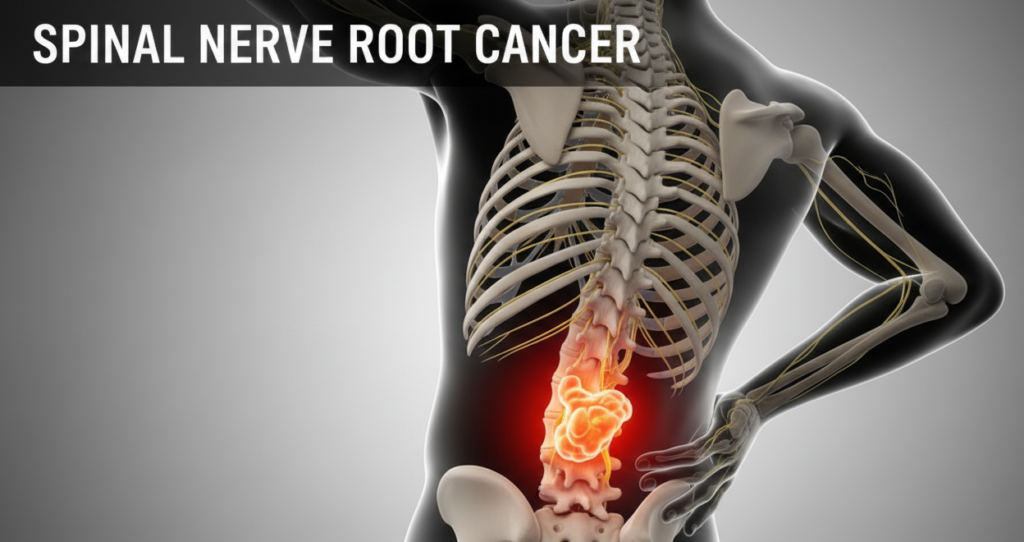
Spinal nerve root cancer is a rare but serious condition that affects the nerves leaving your spinal cord. About 10,000 to 18,000 people in the USA are diagnosed with metastatic spinal tumors each year. Your nerve roots carry signals between your brain and body. When cancer develops in these areas, it interrupts essential communication within your nervous system. This condition often appears in the lumbar spine, which supports much of your body weight and movement. Because of this location, symptoms often affect your physical stability. You may notice issues with balance early in the disease process.
Spinal nerve root cancer differs from tumors that begin in the spinal cord. The spinal cord is part of the central nervous system, while nerve roots belong to the peripheral system. This distinction matters because it affects how symptoms develop and how your doctor approaches treatment. Tumors in the nerve roots often cause compression rather than direct spinal cord damage at first.
As the tumor grows, it places pressure on surrounding nerves and structures. The progression can be gradual or rapid depending on the tumor type. Early detection can improve management of the disease, but many cases are diagnosed after symptoms worsen.
Metastatic spinal nerve root cancer occurs when cancer spreads from another part of your body. Common primary sites for the cancer include the lungs, breast, or the prostate. Recurrent spinal nerve root cancer develops when the disease returns after treatment. Both forms tend to be aggressive and hard to manage.
THE SIGNS AND SYMPTOMS OF SPINAL NERVE ROOT CANCER
The symptoms of spinal nerve root cancer often begin with persistent back pain. This pain usually occurs in the middle or lower back. It does not improve with rest or changes in position. You may also notice that the pain feels deep and constant rather than sharp.
Non-mechanical pain is a key warning sign. This type of pain does not respond to typical treatments like physical therapy. Additionally, it may get worse at night and interrupts your sleep. If you have these symptoms, then this pattern can signal a serious underlying condition like cancer.
As the tumor grows, neurological symptoms begin to appear. You may experience numbness in your legs or arms. These sensations often follow the path of the affected nerves. Over time, the loss of sensation can become worse. Additionally, muscle weakness is another common symptom. You may find it harder to stand, walk, or lift objects. Therefore, simple daily activities can become difficult.
Coordination problems may also develop. You may have trouble with balance while you are walking. Falls can become frequent. These issues significantly impact your independence and safety. In advanced cases, severe medical issues arise. For example, you may lose control of bowel or bladder function. This symptom indicates significant nerve involvement and requires immediate medical attention. Erectile dysfunction may also occur due to nerve damage.
Paralysis can also develop if the tumor continues to grow. This may affect one or both sides of your body. Finally, spinal deformities such as scoliosis can also occur.
TREATMENT FOR SPINAL NERVE ROOT CANCER
The goal of treatment for spinal nerve root cancer is to reduce or prevent nerve damage from pressure on the spinal cord. Your doctor may give you corticosteroids to reduce swelling around the spinal cord. Surgery may be done to remove as much of the tumor as possible and to relieve pressure on your spinal cord. Radiation therapy may also be done instead of surgery.
Treatment for spinal nerve root cancer focuses on reducing nerve compression and slowing tumor growth. Therefore, your medical team may prescribe medications to control inflammation. These medications help reduce swelling around your nerves and may improve your symptoms for awhile.
Surgery is often necessary to remove as much of the tumor as possible. However, complete removal is not always possible. The tumor may be located near critical nerves that limit surgical options. Radiation therapy can target your spinal nerve tumors with precision. Radiation can be used alone or combined with surgery. Chemotherapy as a treatment is less common, as it shows limited effectiveness against many spinal tumors.
IS SPINAL NERVE ROOT CANCER A DISABILITY?
Yes. Spinal nerve root cancer can qualify for disability benefits.
Spinal nerve root cancer qualifies as a disability under SSA rules because the condition meets the step three criteria under listing 13.13B. This listing covers malignant tumors affecting the nervous system. The listing states that any primary central nervous system cancer that is metastatic or progressive or recurrent following initial anticancer therapy meets the listing. If your spinal nerve root cancer meets the listing, then you will be awarded benefits. However, your medical records must document the spread or recurrence of your cancer.
You may also qualify if your spinal nerve root cancer limits your ability to perform basic work activities. The SSA evaluates how your symptoms affect your ability to function. Chronic pain and neurological deficits all play a role. If your condition prevents you from working, then you may meet the disability rules. However, medical evidence must support the severity of your limitations.
You also benefit from the Compassionate Allowance program. This program allows the SSA to make a decision quickly in claims for severe conditions. Spinal nerve root cancer falls within this category due to its aggressive nature. This means your claim may receive quicker approval than standard cases.
HOW TO APPLY FOR SSDI AND SSI BENEFITS
If you cannot work because of spinal nerve root cancer, then you should file for SSD benefits through the SSA. The easiest way to file an application is on the SSA’s website. You can also file an application over phone. But for that you will need to make an appointment by calling your local office. The SSA no longer accepts visitors who walk into their offices.
If you need to file an application, then start by gathering your information. First, you need medical information, which includes your medical records, doctor names, and hospital details. You will also need your work history for the past five years. The SSA reviews both your medical condition and your work background.
When you complete the SSA forms, describe your symptoms in clear language. Explain how spinal nerve root cancer limits your daily activities. Share how often you attend medical appointments. Describe any negative impact from your medications. After you submit your claim, the SSA reviews your file. They may request additional records. They may schedule a free exam with a doctor they choose. If the SSA schedules an exam, then you must attend or they will deny your claim for benefits.
WHAT ARE THE DIFFERENCES BETWEEN SSDI AND SSI BENEFITS?
The SSA offers two main disability programs. These programs are SSDI and SSI benefits. Both benefits require that you meet the medical definition of disability. However, for SSDI you must have a work history. For SSI benefits, you must meet the financial and asset rules.
SSDI stands for Social Security Disability Insurance. You qualify based on your work record and the taxes you paid while working. If you worked 40 hours a week for 5 years out of the last 10 years, then you probably qualify for SSDI benefits.
SSI stands for Supplemental Security Income. This program is based on financial need. You do not need a work history to qualify. If your income and resources are below the SSA limits, then you may qualify for SSI. However, it is not just your income that the SSA looks at. They will also examine your family income if you are married. Additionally, if you rely on someone else for income, they will examine that too.
The medical standard for both programs is the same. You must show that you cannot perform substantial gainful activity (work). Your condition must last at least twelve months or be expected to result in death. Some people meet the rules for both programs at the same and they win concurrent benefits. If you are unsure which SSA program to apply for, then call one of our disability attorneys to review your situation.
SPINAL NERVE ROOT CANCER IS A COMPASSIONATE ALLOWANCE
The Compassionate Allowance program provides faster decisions for severe conditions. Spinal nerve root cancer qualifies due to its serious nature. This program reduces waiting time for those who meet specific criteria. You may receive a decision in weeks instead of months.
To benefit from this program, your medical evidence must be complete. The SSA still requires proof of your diagnosis. Clear medical records ensure that your claim moves quickly through the system. Missing records may delay even a Compassionate Allowance case. Therefore, make sure that you submit all of your medical records as soon as possible to the SSA.
While the process is faster, accuracy still matters. Errors in your application can slow approval. Providing detailed and correct information improves your chances of success. Careful preparation remains essential to winning disability benefits.
BUILDING A STRONG DISABILITY CLAIM
Winning SSD benefits requires strong medical records. You must provide clear evidence of your diagnosis and your physical limitations. Imaging studies, such as MRIs, will help confirm the presence of your tumors. Treatment records also show you are doing everything you can to follow the orders of your doctor.
The opinion of your treating doctor carries significant weight in your claim. Detailed reports about your physical limitations are essential. These reports should explain how your cancer symptoms affect your daily activities. The SSA relies on this information to assess your claim for benefits.
Consistency in your medical records strengthens your case. Regular visits with your treating doctor show that your condition prevents you from working. Gaps in care may raise questions about your symptoms. Therefore, stay engaged in treatment.
WORKING WITH AN ATTORNEY TO WIN YOUR SSDI BENEFITS
Filing an application for SSDI benefits is a lengthy and often frustrating process. Almost 90% of initial claims are denied. That is why working with an experienced SSD attorney makes a difference. At our SSD law firm, we guide you through every step of the process, from gathering evidence to filing appeals.
We know what the SSA is looking for. Most importantly, we understand how to present your case in the best possible light. Our team works closely with your medical providers to obtain the necessary records. We also prepare you for your hearing and represent you before the judge. Our goal is to remove stress so you can focus on your health.
We also stay current on SSA policy updates, including changes to how the agency defines “past relevant work.” In recent years, the SSA has shifted to considering only the last five years of work history, rather than fifteen. This change can work in your favor if your most recent jobs required physical labor that you can no longer perform. Our legal team is familiar with SSA’s regulations and how they can help your case.
HIRING OUR SSD LAW FIRM TO WIN DISABILITY BENEFITS
When you have spinal nerve root cancer, dealing with the SSA process can feel overwhelming. The system has strict rules and detailed requirements. Even small mistakes can lead to delays or denials. Having experienced legal guidance helps you avoid these issues.
Our SSD law firm focuses on helping you build a strong claim. We understand how to present medical evidence effectively because we have been representing clients before the SSA for over three decades. Our team works to ensure your application meets SSA standards. Our support increases your likelihood of approval. The Social Security Administration has a list of medical conditions that qualify for benefits. This list of conditions is known as the “listing” or the “blue book.” If you have a condition on the list, then your lawyer will ask your doctor to fill out a listing form. Ask your doctor to support you in your claim for benefits.
Legal representation also helps if your claim faces challenges. If the SSA requests additional information, then your attorney can respond quickly. Our law firm advocates for your rights throughout the process. This guidance allows you to focus on your health while your claim progresses. We also will file your appeals for you. Unfortunately, most cases are denied multiple times during the review process. You need an attorney on your side.
TAKE THE NEXT STEP TOWARD WINNING SSD BENEFITS
If you have spinal nerve root cancer, then file an application for SSD benefits. Early action helps prevent financial stress during treatment. The SSA process takes time, even with Compassionate Allowance. Starting your claim as soon as possible is important.
At our SSD firm, our lawyers have won over 20,000 SSDI and SSI cases. This means that we have helped over 20,000 people to win Medicaid and Medicare benefits too. Also, in 30 years we have won over $100 million in future and past due SSD benefits for our clients. You are three times more likely to win your benefits if you hire an attorney.
Gather your medical records and consult with your doctor. Make sure your diagnosis and symptoms are in the progress notes of your medical records. This preparation supports a smoother application process. Accurate information helps avoid delays. You should also speak with your doctor about your limitations. Clear medical opinions from your doctors will strengthen your claim. These statements help the SSA understand your condition and play a key role in the decision process.
Our SSD law firm guides you through each step of the disability review porcess. Our experience with spinal nerve root cancer claims provides the legal help you need. With the right support, you can improve your chances of success. Taking action now helps secure the SSD benefits you deserve.