LYMPHEDEMA & SSDI BENEFITS
WHAT IS LYMPHEDEMA?
Lymphedema is a medical condition that occurs when lymph fluid does not move through the body the way it should. Your lymphatic system plays a major role in your immune system. It collects extra fluid, removes waste, and helps protect your body from infection. When your lymph fluid cannot drain, it builds up in your tissues and causes swelling, usually in an arm or a leg. However, lymphedema can also affect the chest, abdomen, neck, face, or genitals.
Many people first notice that a hand, arm, foot, or leg feels heavy before they see visible swelling. For example, you might notice that your ring no longer fits your finger, your shoes may feel tight, or clothing may leave deep marks on your skin. As lymphedema gets worse, it can cause pain, stiffness, and limited movement, which can make even simple daily activities hard to perform.
Unfortunately, lymphedema often lasts for life. While treatment can reduce swelling and improve pain, there is no cure. Because of this, some people with severe cases of lymphedema are unable to work. If lymphedema prevents you from keeping a full time job, then you should file an application for SSD benefits. It is easiest to file an application online. If you need help filing for benefits, then contact us. Our lawyers and staff can help you with your SSD application.
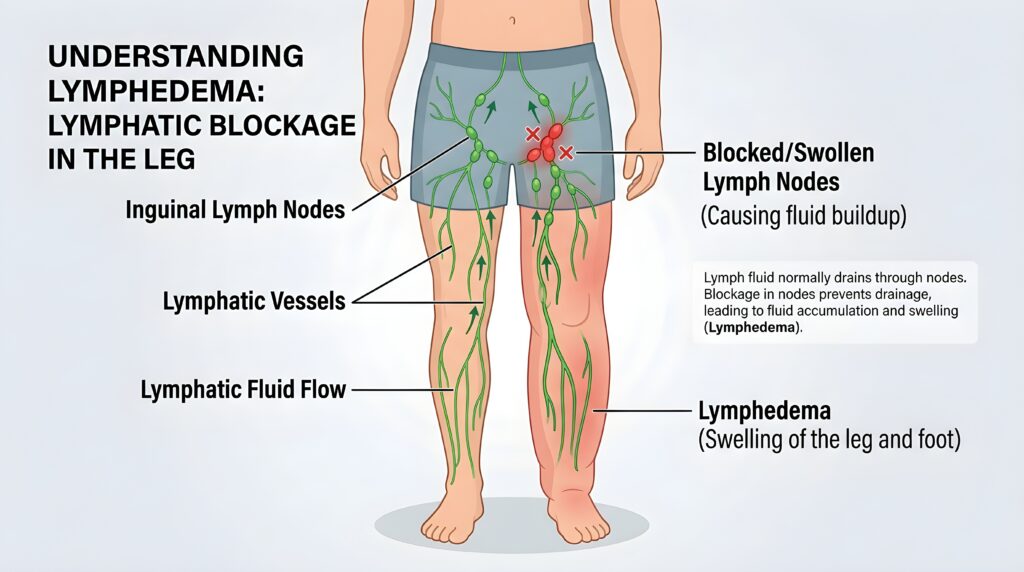
WHAT CAUSES LYMPHEDEMA?
Lymphedema develops when lymph vessels or lymph nodes become damaged or blocked. Once that occurs, lymph fluid can build up in the tissues of the body. This buildup causes pain, tightness, and other symptoms that are difficult to manage.
For example, one of the most common causes of lymphedema is cancer treatment. Many people develop lymphedema after surgery that removes lymph nodes. For example, people treated for breast cancer, melanoma, lymphoma, or other cancers may have lymph nodes removed to check whether cancer has spread. When the lymph nodes are removed, the body may lose some of its ability to drain fluid, especially in the arms or legs.
Radiation treatment can also damage healthy lymph nodes and cause lymphedema. Radiation may create scar tissue that makes it harder for lymph fluid to move normally. In some cases, swelling may appear shortly after treatment. In other cases, lymphedema may not develop until months or even years later. Injuries and infections can also interfere with the lymphatic system. For example, repeated infections can cause inflammation and scarring that affect lymph drainage.
Some people develop primary lymphedema, which happens because the lymphatic system does not develop properly. Primary lymphedema is caused by genes or developmental problems that affect lymph vessels and lymph nodes. It can appear at birth, during childhood, or later as an adult.
Secondary lymphedema develops because another condition, treatment, injury, or infection damages the lymphatic system. No matter the cause, lymphedema can become a chronic condition that affects your comfort, strength, and your ability to work. When swelling is severe, it limits your ability to stand, walk, use your arms, work, and complete normal tasks without pain and fatigue.
LYMPHEDEMA SYMPTOMS
The most obvious symptom of lymphedema is swelling in the affected area. Many people experience a constant feeling of tightness or pressure in the affected arm, leg, or other body area. These symptoms can become worse after standing, walking, or using the affected limb.
As lymph fluid continues to collect in the tissues, swelling can begin to affect your ability to move. You may have trouble bending your knee, moving your ankle, lifting your arm, or walking without discomfort. The extra weight and pressure can make the affected area feel weak, tired, and painful.
Lymphedema can also cause changes to the skin and soft tissues. As the condition continues, the skin may become tight, thick, firm, or hardened. The affected area may feel stiff, and clothing, shoes, or jewelry may no longer fit. In severe cases, the affected limb can become much larger than the other side of the body. This increase in size can limit movement and make it harder to complete daily activities.
In addition to swelling and movement problems, lymphedema can increase the risk of serious infections. The lymphatic system helps protect the body by supporting the immune system and removing waste. When lymph fluid cannot drain properly, bacteria can spread through the tissues more easily. As a result, people with lymphedema have a higher risk of developing infections such as cellulitis.
Pain, limited movement, skin problems, and frequent infections can make it difficult to stand, walk, lift, use your hands, or complete physical tasks. For some people, lymphedema symptoms become severe enough to impact their ability to work. The SSA reviews your medical evidence to determine if your lymphedema symptoms prevent work.
TREATMENT FOR LYMPHEDEMA
Although treatment cannot always cure lymphedema, proper care can help control symptoms. The goal of treatment is to improve lymph fluid movement, decrease swelling, protect the skin, and help you maintain as much function as possible. Because lymphedema is often a chronic condition, many people need ongoing treatment and daily management to keep symptoms under control.
One of the most common treatments for lymphedema involves compression therapy. Doctors often recommend compression sleeves, socks, or other special garments that apply gentle pressure to the affected area. This pressure helps encourage lymph fluid to move through the body and can reduce the amount of fluid that collects in the tissues. However, the sleeves must fit properly or they may not provide support.
Many people with lymphedema also receive physical therapy. A trained therapist may use techniques to drain the lymph nodes. This involves gentle massage methods designed to help move lymph fluid. Physical therapy may also include exercise which can improve strength, flexibility, and movement in the affected area.
In addition, some people need other forms of treatment to manage their symptoms. Compression pumps may be used to apply controlled pressure and move fluid out of swollen areas. Careful skin care is also important because lymphedema can increase the risk of infections. Keeping the skin clean, treating cuts quickly, and watching for signs of infection can help prevent serious issues.
Following your treatment plan helps your health and improves your SSD claim. The SSA expects you to seek treatment and follow reasonable medical advice. Regular medical care also creates records that document your ongoing limitations.
HOW LYMPHEDEMA AFFECTS YOUR ABILITY TO WORK
Lymphedema affects your physical appearance. But it also causes pressure and pain from fluid buildup. This in turn interferes with your strength, movement, balance, and ability to complete normal work tasks.
The location of your lymphedema affects the type of work problems you will experience. When lymphedema affects an arm, hand, or upper body area, you may have difficulty lifting, carrying, typing, writing, or using tools. Your arm may feel weak and tired, especially when you need to perform repetitive tasks for several hours. As your symptoms increase, you may need frequent breaks. Likewise, you may not be able to complete tasks or finish projects on time.
When lymphedema affects your legs, feet, or lower body, standing and walking can be challenging. You may struggle with jobs that require you to remain on your feet, walk throughout the workplace, climb stairs, or carry items while moving. Swelling can also affect your balance and increase the risk of falls. For some people, sitting becomes uncomfortable because pressure can cause pain to increase.
Lymphedema can also create problems for people who work in office jobs. Sitting at a desk for extended periods may cause pain, especially when you cannot elevate the affected limb or change positions. You may need additional breaks to manage pain. These needs can make it difficult or impossible to complete an eight hour workday.
OTHER LYMPHEDEMA SYMPTOMS CAN ALSO IMPACT YOUR ABILITY TO WORK
In addition to physical limitations, many people with lymphedema experience fatigue. Living with lymphedema can place ongoing stress on the body. Pain, infections, and poor sleep caused by symptoms can further reduce your energy and ability to focus. As a result, you may have difficulty with productivity at work, finishing tasks, or working a full time schedule.
Lymphedema often requires regular medical care that can also impact your ability to maintain a job. Doctor visits, physical therapy sessions, compression treatments, and treatment for infections usually require time away from work. Frequent flare ups can lead to missed days, reduced hours, or difficulty keeping a consistent work schedule. You must prove to the SSA at your hearing that you will be absent from work.
It is best to hire an attorney to represent you at your hearing. That way, you can be ready for expert witness. For example, if there is a medical expert at the hearing, then the ALJ will ask the doctor about your medical symptoms. You must be able to question the medical expert. Also, you should understand the role of the medical expert at the hearing . Likewise, if there is a job expert at the hearing, then the ALJ will also ask questions of the VE about jobs. You should be ready to question the VE testimony at the SSA hearing.
YOU CAN GET SSDI BENEFITS FOR LYMPHEDEMA
Yes, you can receive SSDI benefits if lymphedema prevents you from performing substantial gainful activity for at least twelve continuous months. When lymphedema causes significant limitations that prevent you from working, then you should qualify for SSDI benefits. However, the SSA does not approve benefits simply because you receive a diagnosis. Instead, the SSA looks at how much your symptoms limit your ability to work.
Many people with mild lymphedema continue working. Others experience constant pain, frequent infections, reduced movement, and major functional limitations. Those symptoms may prevent any type of full time employment.
Your medical records play a major role in proving your claim. The stronger your evidence, the easier it becomes to show the SSA exactly how lymphedema affects your daily activities and your ability to perform work on a regular basis.
THE TWO SSD BENEFITS YOU CAN APPY FOR THROUGH THE SSA
If you have lymphedema and can’t work, then there are two forms of benefits for which you can file an application: Social Security Disability Insurance benefits and Supplemental Security Income benefits. You can file an application on Social Security’s website. Below is an explanation as to each type of benefit you can apply for:
Social Security Disability Insurance (SSDI):
SSDI benefits are for those who work and can no longer work at any job due to a severe medical condition. The amount of money you will receive in SSDI benefits every month is based on the taxes you paid during while you were working. To qualify for SSDI, you must have earned enough “work credits.”
A work credit is an amount of taxable income. You can earn up to 4 work credits per year. The amount of work credits you need to qualify for SSDI benefits depends on how old you are when you apply. If you don’t have enough quarters of coverage for your age at the time you apply, then you can only file for Supplemental Security Income benefits.
Supplemental Security Income (SSI):
SSI is a needs based benefit and it is for people with little to no income, such as children and the elderly. Anyone whose family income is greater than $5000 a month cannot receive SSI benefits. The SSA counts the income of those in your household, not just your income and assets. You cannot win SSI benefits, no matter how severe your medical condition, if you do not meet the income and asset rules for SSI.
HOW THE SSA EVALUATES LYMPHEDEMA CLAIMS
The SSA does not have a specific Blue Book listing for lymphedema. However, that does not mean you cannot qualify for SSD benefits. Instead, the SSA evaluates your claim by considering the medical condition that caused your lymphedema. Then they look at any related Blue Book listing that may apply to your claim. If there is a medical condition that is causing your lymphedema, then they will determine if you meet a listing under step three.
For example, many people with lymphedema also have cancer, obesity, diabetes, heart disease, venous disease, arthritis, or other serious medical conditions. Even if no single disease qualifies on its own, the combined effect of all your conditions may prevent you from working. For this reason, it is important to provide complete medical records for every condition that contributes to your physical limitations. Even if you think it isn’t important, you need to get treatment and submit the records.
For example, if lymphedema causes mental issues, like depression or anxiety, then seek treatment. It is important to try the medications for mental symptoms. However, it is also important to seek counseling from a therapist. A therapist who sees you on a weekly basis can offer a medical opinion that documents your mental symptoms. If you have mental symptoms, then it can impact your ability to use your skills at work. It is important for the SSA to know if you have mental issues in addition to lymphedema.
MEDICAL EVIDENCE THAT CAN HELP YOU WIN SSDI BENEFITS
You must have medical evidence that supports your application for SSD benefits. Medical evidence is the most important evidence in your SSDI case. The SSA will use your medical records to assess whether your lymphedema prevents you from working. They must see records that document your diagnosis, treatment, symptoms, and functional limitations.
The SSA looks for evidence that shows your symptoms will least twelve months or longer. The SSA also considers whether your condition has improved with treatment or whether your limitations continue despite following your treatment plan.
Your medical records should also describe the symptoms caused by lymphedema. Helpful evidence includes a description of your pain. It should also show muscle weakness, balance problems, difficulty walking, limited use of your hands or arms, and infections. Physical therapy records, wound care records, hospital records, and surgical reports can also prove your claim.
Your doctor should also document whether you have difficulty standing, walking, lifting, carrying, typing, climbing stairs, or sitting for extended periods. If you need to elevate an affected arm or leg during the day, take frequent breaks, then the records should say so. It should also document whether you would miss work because of doctor visits or infections.
Additionally, doctors often measure the size of the affected limb. These measurements show whether swelling continues. When the treating notes support the opinion of your doctor, then it helps the SSA understand why your lymphedema prevents you from working.
HOW AN SSD ATTORNEY CAN HELP YOU WIN BENEFITS
Applying for SSD benefits often be overwhelming, especially when you already deal with chronic pain from lymphedema. The disability process involves strict rules, deadlines, and medical evidence requirements that can be difficult to understand on your own. An experienced SSD attorney understands how the SSA evaluates claims and knows what evidence builds the strongest case possible.
An attorney can review your medical records to determine whether they fully document the severity of your condition and your work related limitations. If important evidence is missing, your attorney can help obtain additional medical records, therapy notes, and hospital records. Your attorney can also obtain employer records that show you missed work or were fired due to your lymphedema.
An attorney can review your medical records, identify missing evidence, request detailed opinions from your doctors, and prepare your claim before the SSA reviews it. If the SSA denies your application, then your attorney can file an appeal.
Your attorney can also prepare and file your SSD application, communicate with the SSA on your behalf, monitor deadlines, and respond to requests for information. If your application is denied, then your attorney can develop additional evidence, prepare you for your hearing, question witnesses, and present legal arguments to the SSA judge.
Many people mistakenly believe that simply proving they have lymphedema is enough to qualify for benefits. However, the SSA must also see medical evidence showing your condition prevents you from full time work. An SSD attorney understands how to connect your medical records, your symptoms, and your limitations to the SSA’s rules.
If you don’t hire an attorney, then there is a good chance you will not win your case. Don’t take that chance. You should hire a lawyer to help you file your application and represent you at your hearing.
HOW TO IMPROVE YOUR CHANCES OF WINNING SSDI BENEFITS
The best SSD claims include consistent medical treatment, detailed medical records, and a description from your treating doctor of your daily limitations. Every medical appointment gives your doctor another opportunity to record important observations about pain, movement, and infections. You must keep your doctor informed about your lymphedema symptoms. The SSA is looking at your records to see if you visit the doctor every month and follow your treatment plan.
Tell your doctor about every symptom you experience. If you cannot stand for long periods, struggle to lift objects, need to elevate a limb several times each day, then make sure those problems appear in your medical records. Accurate medical evidence allows the SSA grant your benefits.
Finally, remain patient throughout the SSDI process. SSD claims take time because the SSA carefully reviews medical evidence before making a decision. They also take time because millions of people are filing for benefits and the SSA does not have enough employees to do the work. Until the federal government fully funds the SSA and hires additional workers, the SSA will always be behind in their case load. However, with strong legal support, your severe lymphedema case will result in the SSDI benefits you need.
HIRE US TO WIN YOUR SSD BENEFITS FOR LYMPHEDEMA
If lymphedema keeps you from working, then speak with an SSD attorney. We can help you understand your rights and build a winning case. Careful preparation, detailed medical evidence, and expert legal guidance can improve your chances of winning the SSD benefits you deserve.
The SSA benefit process can be long and complex. Hire our SSD law firm to give you legal advice and walk you through the application process. In over 30 years, we have won over $100 million in ongoing and past due SSD benefits for our clients. You can’t trust us with your lymphedema case and to offer you the personal care you need during this difficult time.
If you need help filing for SSDI or SSI benefits, then hire our law firm to help you. At our law firm, we help you apply and appeal any SSA denial you receive. You only have 60 days to appeal an SSA denial. So, don’t delay in calling our office. We have been winning SSD cases for over 30 years. During that time, we have won over 20,000 SSDI cases for our clients.
If you need SSD benefits, then hire an attorney with the legal experience to win. If you don’t win, then you don’t pay an attorney fee. Let us win your SSD benefits for severe lymphedema. For help, contact us.